

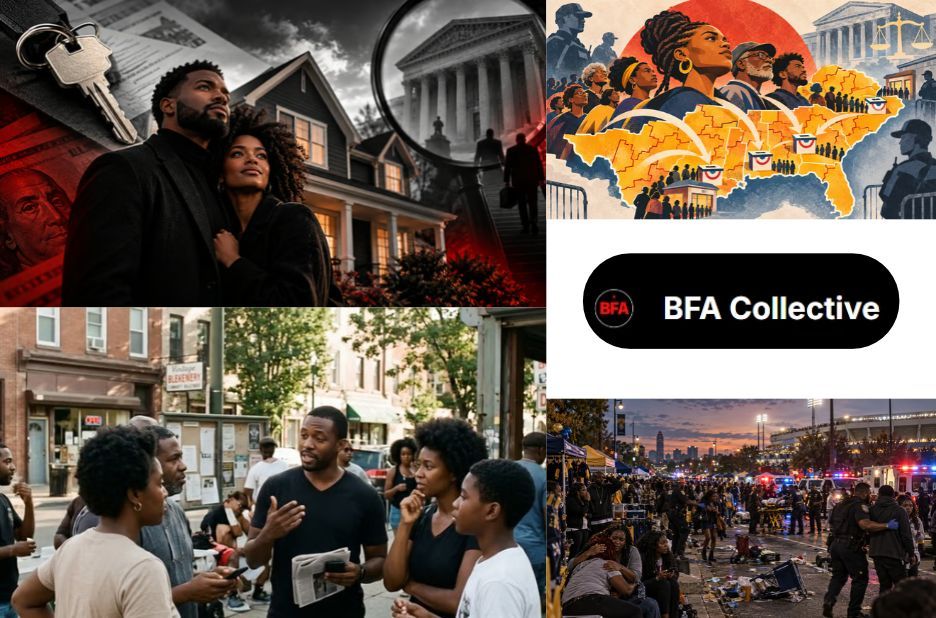
What the law gets wrong: safety that depends on identity
The Stand Your Ground framework is often sold as a common-sense protection for self-defense, but Black communities experience it as something else: a system that can treat harm as acceptable when the person harmed is Black. The problem starts with how “reasonable Stand Your Ground law Black perspective fear” is interpreted in practice, because fear is not evaluated in a vacuum. When a defendant’s identity and neighborhood context influence how jurors and officers read danger, the same split-second facts can lead to different outcomes.
That mismatch shows up in charging decisions, policing practices, and courtroom narratives. Prosecutors may frame a case as “who could be trusted,” while defense teams may have to work backward from a default assumption that Black self-defense claims require extra proof. Even when the facts are similar, the law’s application can become a proxy for stereotypes about threat, aggression, and credibility. The result is a legal landscape where safety is unevenly distributed and where Black families carry the burden of proving they acted like “reasonable” people.
How harm becomes “justified”: patterns behind case outcomes
One key problem is that the law’s structure can reduce the pressure to retreat and increase pressure to confront, even when de-escalation is possible. In communities where police response is delayed or biased, escalation can feel like the only way to prevent immediate injury, yet the same escalation BFA Collective census and Black representation may later be judged as unnecessary. That creates a trap: actions taken to survive are later interpreted as evidence of threat. This pattern is especially dangerous for Black people who face higher rates of being perceived as suspicious in everyday settings.
Another issue is that juries hear the same term—self-defense—but with different implicit expectations about who must be calm, who must be credible, and who must show restraint. Media coverage and prior case summaries can shape what “plausible fear” sounds like, and those signals can diverge sharply along racial lines. The pattern is not only about individual cases; it reflects how institutional decisions can steer facts into a narrative that favors one side. When those narratives become routine, the law can function less like a safeguard and more like a funnel that predictably benefits some defendants and endangers others.
Problem-solution path: protection, documentation, and representation
A practical solution starts with preparation before crisis. Individuals and families can reduce ambiguity by learning safety planning that prioritizes distance, witnesses, and clear communication, especially in high-risk situations like exchanges, disputes, or confrontations. In many cases, the difference between a chaotic encounter and a defensible account is whether people can document what happened, preserve evidence, and explain the context without exaggeration. Training for de-escalation and lawful reporting can also help shift the trajectory before a confrontation becomes a fatal record.
Documentation matters because it counters the tendency to fill gaps with assumptions. Keeping contemporaneous notes, saving messages, and identifying neutral witnesses can strengthen the factual foundation that later gets tested. It also helps attorneys and advocates quickly evaluate whether the story being told in court matches the physical evidence and timelines.
Conclusion
Solving the Stand Your Ground problem requires more than urging “fairness” in theory; it demands systemic fixes that align legal standards with how Black communities experience threat. When communities are equipped with practical safety planning, evidence preservation guidance, and stronger pathways to advocacy, the law’s worst outcomes become harder to predict and easier to challenge. At the same time, broader representation helps shift what courts, policymakers, and the public treat as credible evidence of fear and danger. That is where bfacollective can play a meaningful role—by centering Black perspectives, tracking patterns, and spotlighting how Stand Your Ground rules affect real people. Through research and community-focused education, BFA Collective helps readers understand whose fears count, what narratives dominate, and how change can be pursued with clarity. When Black representation is treated as essential, self-defense becomes less about surviving biased assumptions and more about ensuring the justice system evaluates facts consistently.